

Sweating all the stuff
On outcomes, hobbies, protecting your mental health, and the persistence of chard

Hello, friends.
This week I’m thinking of the push and pull of abundance and loss. Outcomes, in other words. May is full of deadlines and notifications and other publishing things I have absolutely no control of beyond my choice to send pieces of myself out into the world. You’re maybe in the same boat.
A few years ago, I planted a pair of pear trees in our backyard. When I saw a pear tree in real life for the first time as a child, it boggled my southern Californian mind that this luxurious fruit could simply grow in one’s backyard. It was a dream realized to plant these two trees as an adult, and in their first year enjoy a very small bounty of fruit.
This year seemed like it would be our best harvest yet given the trees’ profusion of flowers and then tiny pears. There were unseasonably hot days in March and April and so I watered them by hand, and then it rained and seemingly nature was doing the job for me. I foolishly thought these were perfect conditions for the baby pears to thrive. Apparently, this combination of moisture and heat is actually more conducive to fire blight. Blight! Of the fiery kind! I was unprepared for this turn to the biblical. The baby pears shriveled and darkened, tips of branches blackened and curled. I stopped watering and clipped the blight so it wouldn’t spread. A single surviving pear remains, but I’m not optimistic.
And then there’s the chard.
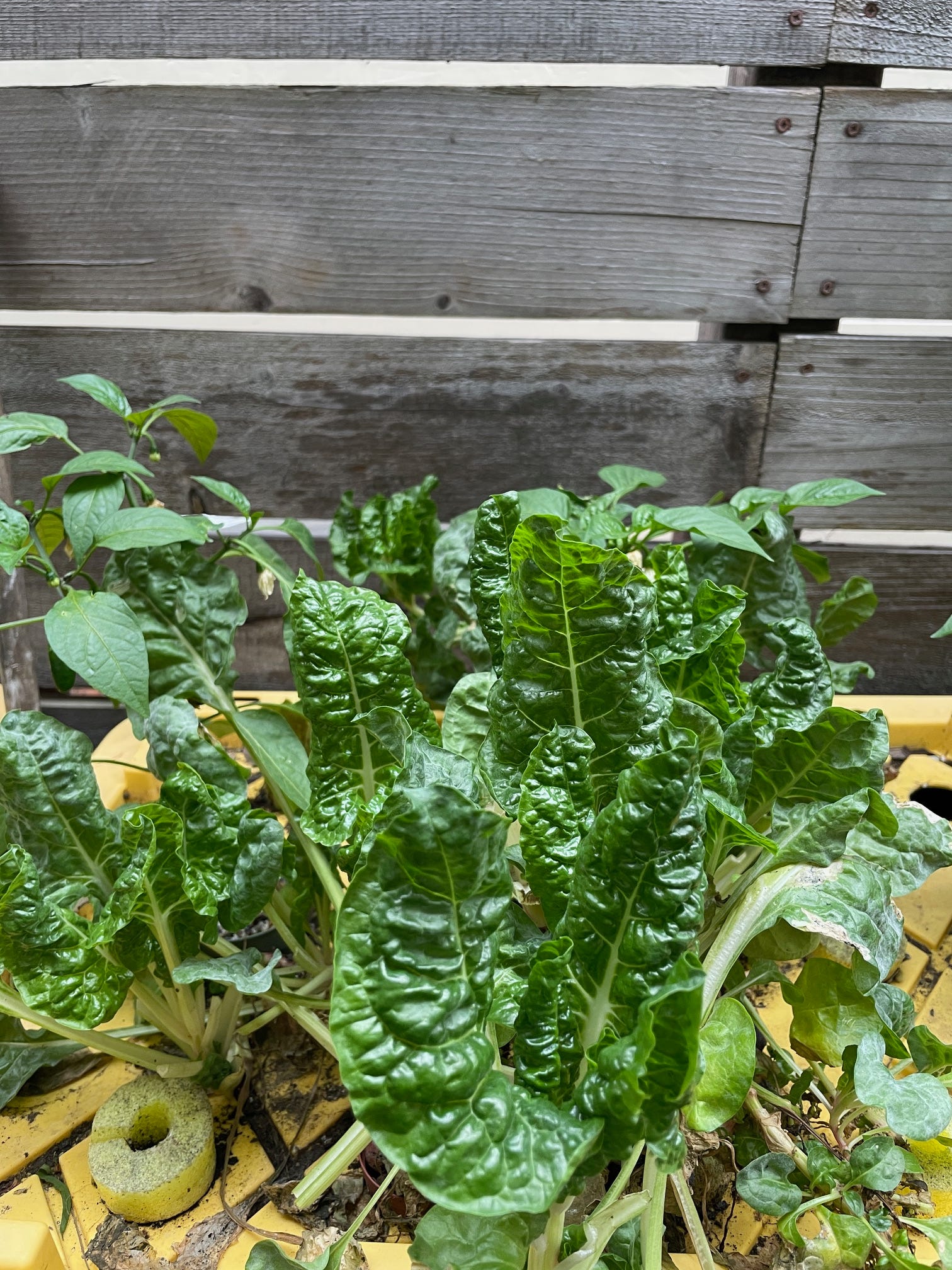
The chard grows on the ugly, sun-weathered side of the house, in an oversized plastic container that my husband DIY’d with pieces of pool noodles to be self-watering and fertilizing. The chard had an abundant first season, and when its neighbors—peppers and lettuces and tomatoes—ran their course and were removed, the chard, its stalks stockier but still leafy, stayed. It was mostly neglected as we waited for the next planting season. This neglect was of no concern to the chard, and, charmed by its persistence, we restarted our maintenance. It continues to grow, and its many leaves go into my favorite weekly soup.
This is all to say, we often don’t choose our visible successes.
How do I…not sweat the outcome
Christina Wolfgram is a delight and the best kind of multi-hyphenate: writer, comedienne, and mental health enthusiast. She also gave me the most incredibly thorough astrological reading of my life?! Her book, F*cking Deal With It, was published in 2024 and is “an irreverent, interactive guided journal for anyone who wants to stop being miserable and get the hell on with living.” I’m fortunate enough to chat with Christina all the time for business lady stuff, but for this newsletter, I wanted to talk outcomes and how writers can be online while protecting their mental health.
TŽ: You’ve quit social media?! Tell me more about this.
CW: Yes!! The only social media app on my phone right now is YouTube because I need my ASMR videos. I can definitely tell my brain is in shock after being ridiculously addicted to Instagram and TikTok for so many years — I still pick up my phone involuntarily 8,000 times a day, but there’s some relief in not constantly being inundated with images of everyone doing better than me. Whew!
During the Buzzfeed Boom of 2016, I lucked out getting a job making comedy videos with one of their competitors, Zooey Deschanel’s HelloGiggles (don’t bother googling, the corporation that bought it nuked the entire site, RIP). Because there was such a high demand for content, I’d have an idea one day (it’s me, drinking wine/painting myself green/realizing my period soaked through my wedding dress), film it the next, and have it in front of millions of eyes by Friday. It didn’t register how this wasn’t a particularly unique situation. Anyone with a computer could do that same thing, and most of them weren’t crusading for more women’s health representation in media.
Two years ago, my professional Facebook page — which in a lot of ways served as the only proof of my former success — got hacked. I watched helplessly as someone posted the absolute worst stuff under my name next to that damn blue verification check I worked so hard for. I’ll spare you the worst details, but I will say that when I finally got ownership of the page back, the first post I deleted contained the n-word (ahhhhhhhhhhh!!!!!!!!!!!). The content these monsters were posting was bad, but what really broke me were all the comments agreeing with the horribleness.
It was the push I needed and I deleted IG and TikTok that day. Cold turkey. This phase of my life reminds me a lot of getting sober from alcohol, actually — I know social media is killing me and my ability to be my best self, but wow somehow FOMO still kicks me in the stomach several times a day. Excuse me, I need to listen to some ASMR to calm down real quick.
TŽ: My first thought is agghhdaeksasdkfafdfadsd, but also, there’s such an onus on writers now to have an online presence so you can sell your book to an agent, then a publisher, then an audience, even as self-promotion feels antithetical to the art. This is the second social media horror story that I’ve heard from a writer this week, and it reminds me how much I don’t want to be perceived. How can we be fruitfully online in a way that doesn’t obliterate our mental health? Does such a thing exist?
CW: Oh no! That’s terrible. My heart goes out to them — social media is hard enough without some public disaster caused by strangers. Beyond turning on two factor verification, I have no idea how to prevent identity theft and other Very Bad Things from happening.
I may be dreaming big dreams, but I do think it’s possible to protect your peace and be online at the same time. You have to be true to yourself (kind of a crazy concept, I just came up with it). Be honest about your intentions and your comfort zones. If you don’t like being on camera, start a Substack or a podcast. If you want to entertain, make funny videos; if you want to share your process, make educational videos. It also helps to choose one social media platform and stick to that for a while — it’s tempting to be everything everywhere all at once, but at that point you are working as a social media director, not a writer anymore.
I think where things start to get hairy is when the intention is to be popular. I can feel when someone has taken a “go viral in two weeks” course and is lip-syncing to a trend like they are being held at gunpoint. It’s horrible for them, it’s horrible for us.
There was a miraculous point in my creative life where scrolling through social media truly inspired me. Half of my vocabulary comes from Vines, probably, and I was moving so quickly I didn’t get stuck overthinking my ideas. Plus, I have to admit that my book deal would’ve never happened if I hadn’t made a bunch of videos about dealing with depression. But I’ve changed and need to accept that, at least right now for me, the scroll … takes a toll!
TŽ: This is such great advice. (To the “go viral in two weeks” note, this is how I feel about 85% of author unboxing videos, which often feel like less impassioned hostage videos.) Maybe it’s my advanced years, but I’ve hit the point in life where I’m not going to do the things I really don’t want to do. On the more positive side, I’m also inclined to try things I’m interested in regardless of outcome or how silly I might look in the process. You have some new hobbies, and some serious longstanding hobbies. Tell me more about this!
CW: Oof — caring about the outcome is a weakness of mine, and I’ve been trying to use hobbies as a way to combat that longstanding, poky habit. My recent big fun “I am so cool and chill and don’t even care if I am creating for an audience” hobby has been a musical theatre dance class once a week. It’s for beginners and moves super slowly. It took us about two months to learn choreography for just the first verse of “You Can’t Stop the Beat” from Hairspray. Despite the glacial pace, probably slower than the dance classes I took in preschool, I still manage to go so hard I’ve tweaked my neck a couple of times and may or may not have started designing my own musical theatre dance class (there should be singing!) in my head. I’ve been trying to see as many musicals as I can (a few weeks ago I saw an all female cast do Man of La Mancha set in an insane asylum, a decision I love and hate so equally it hurts my brain), and I also found a Broadway sing-along event here in Seattle where you can sit with a bunch of other theatre lovers and basically do hours of musical karaoke but as a group. So imagine forty people belting every single part in “One Day More” as loud as humanly possible. It’s very clear we all listened to the same Broadway cast recordings because we all do the same inflections. I also paint, but I usually have to think of the piece as a present for someone or I totally lose steam. I paint a lot of pets! I can’t help but blame my Capricorn moon for not being able to just enjoy the act of doing the thing — I really do need a destination to enjoy the journey everyone’s always going on about.
TŽ: I’m also purely in the aspirational phase of not caring about outcomes. Because really, don’t we have to care about the outcome a little to enjoy doing something? On that note, please give me your hottest take. Your hottest take on anything!
CW: Yeah! Caring about the outcome just a little is a solid goal, I like that. Also, I just realized I forgot to say that I also play Dungeons & Dragons for fun. There are sooo many rules but also you’re improv-ing for hours at a time — definitely an exercise in caring less about outcomes and enjoying the ~journey~.
I’m afraid my hot take might be a little on the undercooked side — Hot Pocket that’s lava hot on the outside but still has a wad of ice in the middle.
I think anyone who has over $500,000 to their name has to take public transportation for a year.
Only public transportation. No Ubers or jets or palanquins! I’m convinced that if rich people had to take the bus everyday, the world would start looking very different very quickly.
Make sure to check out Christina’s Substack, The Sob Blog!
Places to submit
Speaking of outcomes, here are some places you should be submitting to now (including some closing today, so now now).
Literary magazines
AGNI: Closes 5/31.
Baltimore Review Summer Contests and Regular Submissions: Closes 5/31.
Boulevard: Closes 5/1
Fairy Tale Review: Closes 6/15.
Lascaux Prize in Flash Fiction: Winner receives $1,000, a bronze medallion, and publication in The Lascaux Review. Closes 6/30.
New Letters: Literary awards ($2,000 for fiction, nonfiction, and poetry) open through 5/18. Regular submissions open indefinitely.
New Orleans Review: Poetry contest ($500 prize and publication) open through 5/1. Regular submissions open indefinitely.
Ninth Letter Literary Awards: The winner in each genre (poetry, fiction, and creative nonfiction) will receive $1,000 and publication. Closes 5/1.
North American Review: Closes 5/1.
Poetry: Closes 6/15.
Puerto del Sol: Closes 5/1.
Southern Humanities Review: The Auburn Witness Poetry Prize awards an annual $1,000 prize and publication opportunity for a poem of witness. Judged by A. Van Jordan. Closes 6/1.
Book/anthology/press prizes
Adrift Short Story Contest: The winner will receive $500 dollars and five copies of the anthology in which the story appears. Closes 7/15.
The Backwaters Press Prize in Poetry: The winner will be awarded a $2,000 cash prize and the honorable mention will be awarded a $1,000 cash prize. Both winners will be awarded the publication of their book by the University of Nebraska Press under its imprint, The Backwaters Press. Closes 5/1.
Bennett Nieberg Transpoetic Broadside Prize: Awards a single poem written by a trans poet who has yet to publish their first full-length book. $500 prize and 5 limited edition broadsides of the winning poem. Closes 5/1.
Catamaran Poetry Prize for West Coast Poets: A prize of $1,000 and publication in book form will be awarded to a poet for the winning poetry collection selected by the judge for publication. Closes 7/1.
Fence Modern Poets Series Book Prize: Open to full-length poetry manuscripts; an award of $2,000 will be paid upon publication. Closes 5/31 or once 675 submissions have been received.
Fence Ottoline Book Prize: Open to full-length poetry manuscripts by any person who identifies as a woman and/or female, including trans women as well as people of variable gender. An award of $5,000 will be paid upon publication. Closes 5/31 or once 675 submissions have been received.
Flannery O’Connor Award for Short Fiction: Each year, one short story collection manuscript is selected for publication with University of Georgia Press and a prize of $1000. Closes 5/31.
Lost Kite Editions Chapbook Prize: Awarded to a chapbook of any genre; the winning author will receive a $1,500 award and 20 contributor copies. Closes 5/15.
Press 53 Award for Poetry: Publication by Press 53 of the winning poetry collection as a Tom Lombardo Poetry Selection, $1,000, and 53 copies. Closes 7/31.
The Publishing Laboratory at the University of New Orleans: The selected author of an unpublished novel or short story collection will receive a $10,000 advance on royalties and a contract to publish with the University of New Orleans Press. Closes 8/31.
Split/Lip Press: Call for multigenre full-length books over 125 pages. Closes 6/1.
Fellowships/grants/residencies/workshops
Alan Andres Writer-in-Residence: A year-long residency with a $70,000 stipend, $2,500 for professional development, and a private office in the Boston Public Library to complete a children’s or YA project (fiction, nonfiction, poetry, plays, or graphic novels). Closes 6/5.
Anne LaBastille Memorial Writers Residency: The Adirondack Center for Writing’s two-week residency at a lodge in the Adirondack Mountains. Closes 5/18.
The Bard Fiction Prize: The Bard Fiction Prize is awarded to a promising emerging writer who is an American citizen aged 39 years or younger at the time of application. In addition to a $30,000 cash award, the winner receives an appointment as writer in residence at Bard College. Closes 6/1.
Headlands Center for the Arts Artist in Residence: The Artist in Residence (AIR) program awards fully sponsored residencies to approximately 50 local, national, and international artists each year. Residencies of four to ten weeks include studio space, chef-prepared meals, housing, travel and living expenses. Closes 6/1.
Kerouac Project Residency: Each residency consists of approximately 4 weeks to 7 weeks in the cottage where Jack Kerouac wrote his novel Dharma Bums. Utilities and a food/ grocery stipend of $300 (4 week residency) or $600 (7 week residency) are included. Closes 5/1.
The Kyoto Retreat: The Kyoto Retreat offers artists, curators, and writers, based anywhere in the world, an opportunity to spend four weeks in Kyoto, Japan, for research, exploration, and inspiration. If selected for the retreat, you will receive a roundtrip flight, a private bedroom, and $800 USD to supplement meals and local transportation. Closes 7/17.
Marble House Residency: “Marble House Project accepts approximately 50 artists from both the United States and abroad. Each session hosts eight artists and is carefully curated to bring together a group of creative workers across various disciplines…” Closes 5/17.
Monson Arts: Residents receive a private studio, private bedroom in shared housing, all meals, and $500 stipend ($250 for 2-week programs). Fall residency applications close 5/15.
Patricia Kailis International Writing Fellowship: Open to writers living outside Australia; a residency based at the Centre for Stories in Perth, Western Australia. Closes 5/8.
PEN America Literary Grants: Various grants for translators, children’s and young adult novelists, immigrant and refugee writers, and oral histories. Closes 6/15.
Ragdale: 18-day residency session in 2027 for individuals. Closes 5/14.
Upstart & Crow Climate Writers’ Residency: The program includes dedicated, month-long access to our Granville Island studio, a $4,000 grant, and a focused environment for writers developing an original work of non-fiction. Closes 5/15.
Whiting Nonfiction Grant for Works-in-Progress: $40,000 will be awarded to ten writers completing a deeply researched and imaginatively composed book-length work of nonfiction for a general adult readership. Closes 5/31.
Willa Cather Residency for Writers: Offers emerging writers two immersive weeks in Red Cloud, Nebraska with housing and per diem. Closes 5/1.
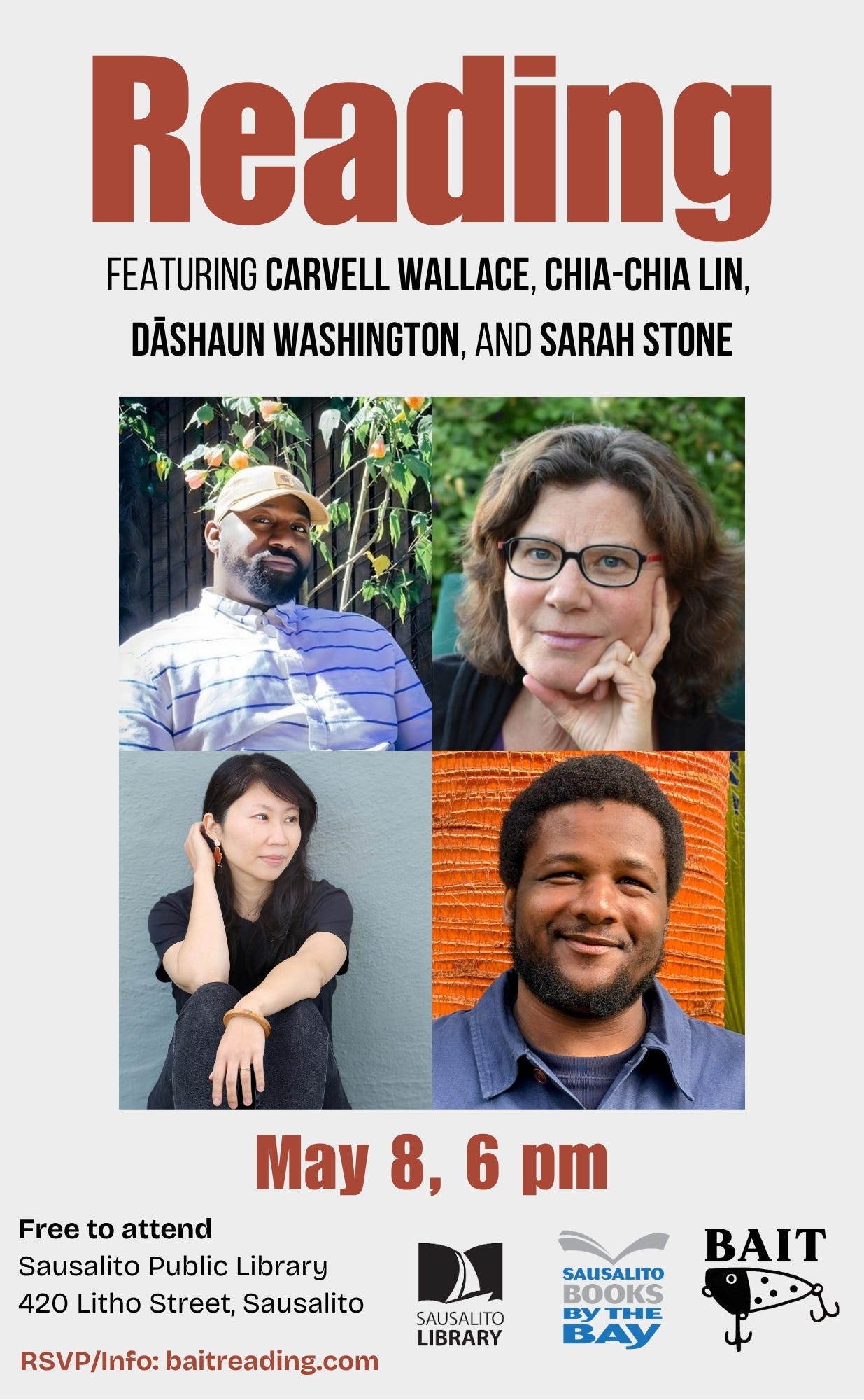
Come hang out with me next Friday, May 8, at 6 pm for a BAIT reading event with Carvell Wallace, Chia-Chia Lin, Sarah Stone, and Dāshaun Washington at the Sausalito Public Library. Full event details and free RSVP here.